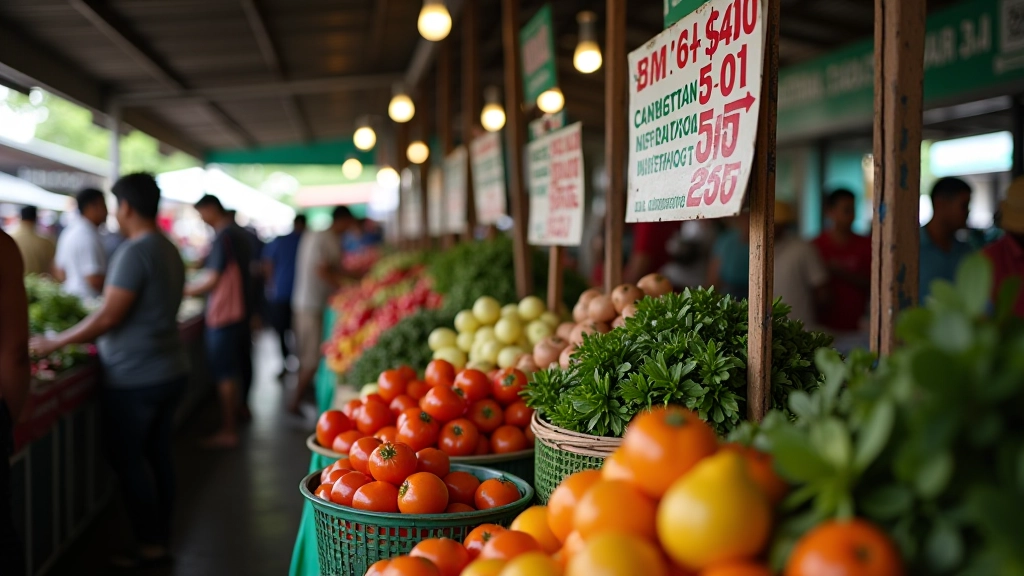
Common Questions About Food Prices in Malaysia
Quick answers to help you understand price movements, FAMA data, and how supply chain changes affect what you pay
Food prices in Malaysia follow seasonal supply patterns. Rice prices typically rise during monsoon months (November–March) when harvests are affected, while vegetable prices spike during dry seasons when local production drops. Import costs also increase when shipping rates go up, which you’ll often see reflected in cooking oil and fish prices. Understanding these patterns helps you plan purchases or inventory better.
FAMA (Federal Agricultural Marketing Authority) publishes weekly market reports showing wholesale prices, retail prices, and supply levels for staple foods across Malaysia. The reports break down prices by location and commodity type. If you’re a trader or business owner, you can use these reports to benchmark your costs against market rates—for example, checking if your supplier’s rice prices align with FAMA’s reported wholesale prices. The data’s usually 2–3 days behind real-time, so it’s better for spotting trends than immediate trading.
Malaysia uses several mechanisms: price controls on essential items like cooking oil and chicken (keeping them below market rates), government subsidies for local farmers to encourage production, and strategic imports when domestic supply runs low. When prices spike unexpectedly, the government may release reserves or negotiate cheaper imports. These aren’t permanent fixes—they’re short-term measures to prevent hardship. Knowing which items are price-controlled helps you understand why some foods feel stable while others fluctuate wildly.
You can monitor prices by visiting local wet markets, checking supermarket receipts over time, or calling suppliers directly. FAMA’s website publishes weekly reports you can download free. Wholesalers often have price lists they’ll share if you ask. For a more systematic approach, create a simple spreadsheet tracking 3–5 staples you care about (rice, eggs, oil, onions, chicken) with dates and prices—after 4–6 weeks, you’ll spot your local patterns. Some traders use WhatsApp groups where market information gets shared daily.
Every step from farm to your table adds cost: farmer harvests, middleman buys, wholesaler distributes, retailer sells. When supply chain problems happen—bad harvests, transport delays, port congestion—costs jump at each step, and you feel it at checkout. For example, flooding affecting rice farmers means less supply, wholesalers pay more, retailers charge more. Import-dependent items like cooking oil are extra sensitive to shipping costs and currency changes. When you understand this chain, sudden price jumps make sense instead of feeling random.
Wholesale is what traders and shops pay when buying in bulk—usually much cheaper per unit. Retail is what you pay at the supermarket or market stall. The gap between them (the markup) covers storage, transport, shop rent, and profit. In Malaysia, this gap can be 20–40% depending on the product and how many middlemen are involved. Understanding this matters if you’re negotiating supplier prices or thinking about buying wholesale yourself—you’ll know if a quoted price is reasonable by checking FAMA’s wholesale rates.
Need more personalized guidance?
Our guides go deeper into price monitoring methods, reading market reports, and adapting to seasonal changes. Let’s help you make smarter food cost decisions.
Get in Touch